
Book Review: Pick a Style on Purpose with Software Architecture Patterns
A readable guide to picking architectural styles by business goals: microservices, event-driven, layered, microkernel, space-based—trade-offs and pitfalls.

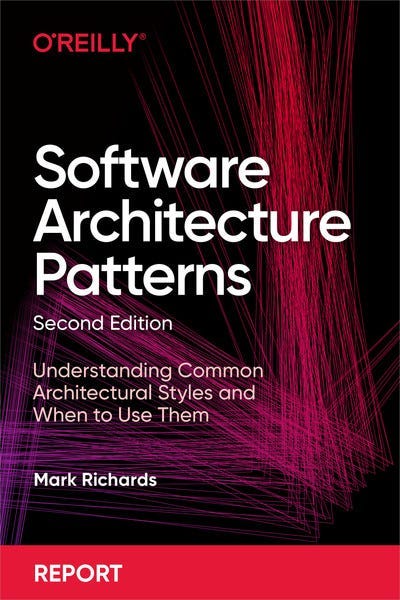
Architecture starts with needs.
Some systems need cheap delivery and predictable testing. Some need independent scaling. Some need fan-out, plugin variation, fault isolation, or low-latency throughput under spikes.
Software Architecture Patterns gives senior developers, tech leads, and architects a practical way to connect those pressures to architectural style. It explains the major styles, shows what each one makes easier or harder, and keeps returning to the question that matters: what qualities does the business need this system to have?
That makes the book especially useful before a rewrite, a platform decision, or a move toward microservices, event-driven architecture, or any other style with a strong reputation and a long operational tail.
Architectural styles are tools. Choose them by fit.


The Book's Core Idea
The book opens with a simple distinction that saves teams from muddy conversations: an architectural style sets the macro-structure of a system, while a pattern is a reusable building block inside that structure.
That distinction sounds academic until a team skips it.
When people use style and pattern as interchangeable words, design conversations get muddy fast. One person may be talking about the system's deployment shape. Another may be talking about a local implementation tactic. A third may be arguing for microservices because the word feels modern. The result is often a hybrid system with unclear boundaries and weak ownership.
The book pushes readers to name the larger shape first. It asks teams to think about qualities such as scale under load, burst capacity, performance, fault isolation, and changeability. Those qualities should guide the architecture discussion from the start.
This is where the book is strongest: it treats architecture as a decision funnel.
First, understand the problem. Then choose the broad structural shape. Then select patterns that support that shape.
Start With The Big Shape
The early chapters classify architecture along two useful axes.
The first axis is deployment shape: monolithic or distributed. A monolith packages the system as one deployable unit. A distributed system splits work across multiple services.
The second axis is partitioning: technical layers or domain boundaries. Technical partitioning separates presentation, business logic, persistence, and database concerns. Domain partitioning groups work around areas such as customer, shipping, or payment.
Those two axes combine in practical ways. A system can be a layered monolith. It can be a modular monolith partitioned by domain. It can be a distributed system organized around business capabilities. The important move is to separate deployment from partitioning, because teams often blend those decisions too early.
The book's guidance is straightforward: choose the shape that supports the dominant quality drivers.
Monoliths usually cost less to build and operate. They simplify delivery, testing, and coordination. They work well when the domain is modest, the team is small, and coarse scaling is acceptable.
Distributed systems give teams finer control over scale, recovery, and blast radius. They also bring the familiar pain of distributed computing: latency, coordination, observability, governance, and harder testing.
The most useful question is simple: where does change happen, and what kind of failure can the business tolerate?
Layered Architecture: The Familiar Default
Layered architecture is the classic n-tier model: presentation, business logic, persistence, and database. Requests move down through the layers. Responses move back up. Each layer owns a clear responsibility.
The book treats this style with fairness. Layered architecture remains valuable because it is familiar, quick to staff, and easy to explain. It fits CRUD-heavy business systems where speed to first value matters and operational needs are modest.
Its limits are equally clear. Scaling often means scaling the whole application. Domain-heavy changes can scatter across several layers. A simple business capability may require edits in presentation, service, persistence, and database code, which makes change feel heavier over time.
The useful lesson is fit. Use layered architecture when changes stay reasonably layer-localized and the team benefits from predictable structure. Watch it carefully when the domain starts changing along business boundaries.
Microkernel: Keep The Core Stable
Microkernel architecture organizes the system around a stable core and a set of plugins. The core owns the contracts, lifecycle, and shared behavior. Plugins add variants, rules, integrations, or adapters.
The book connects this style to familiar systems such as IDEs and browsers, then shows why it matters for enterprise software. Some business applications need frequent variation by region, customer, policy, or integration. A microkernel lets the team add or change those variants without destabilizing the core.
The trade-offs are practical. Plugin boundaries need enforcement. Version compatibility needs attention. Observability needs to reach each plugin, because a plugin failure can look like a core system failure to the user.
The book also makes a useful point about scope: microkernel can be the whole architecture, or it can be a local pattern inside another style. That flexibility makes it a strong option when variation shapes the system.
Event-Driven Architecture: Let Facts Travel
Event-driven architecture structures work around events. Producers announce facts. Consumers subscribe and react. The book separates initiating events, which trigger work, from processing events, which broadcast state changes.
That distinction helps clarify a common source of confusion. In an event-driven system, a producer announces that something happened. Consumers decide what to do with the fact.
This style fits domains where one action naturally triggers many reactions. An order is placed. Inventory changes. Payment starts. Shipping prepares. Notifications may follow. Event-driven architecture makes that fan-out natural and extensible.
The cost shows up in time. Work happens asynchronously. State may become eventually consistent. Duplicate handling, idempotency, schema versioning, dead-letter handling, and tracing become first-class architecture concerns.
The book's value here is its crisp framing. Event-driven systems can improve throughput, resilience, and extensibility. They also require teams to reason across time and across components.
Microservices: Autonomy With An Operating Cost
The microservices chapter is one of the most useful parts of the book because it keeps the benefit and the bill visible.
Microservices split a system into independently deployable services. Each service owns its code, data, and contract. Boundaries should align with business capabilities or bounded contexts. Communication often combines synchronous calls, such as HTTP or gRPC, with asynchronous messaging.
The value is easy to see. Teams can deploy independently. Services can scale independently. Failures can stay contained when boundaries are clean.
The cost is easy to underestimate. Microservices need platform automation, service discovery, configuration management, monitoring, tracing, contract testing, component testing, end-to-end testing, and governance. Cross-service workflows need sagas, compensating actions, or prebuilt read views.
The book offers good heuristics: split by change frequency and data ownership, use backward-compatible contracts, and protect synchronous calls with timeouts and circuit breakers.
Its most grounded advice is to prefer a modular monolith until platform maturity and observability can support distributed operations. That recommendation will save some teams from buying distributed complexity too early.
Space-Based Architecture: Move Work Near Data
Space-based architecture shifts the hot path away from a central database and into an in-memory data grid shared by processing units. Data is partitioned and replicated in memory. Persistence happens through write-behind to a colder store.
This style fits workloads where throughput and low latency dominate, such as high-traffic commerce, session-heavy portals, or trading systems. It absorbs spikes by keeping work near the data and reducing database round trips.
The book keeps the enthusiasm grounded. Space-based systems introduce eventual consistency, cluster management, rebalancing, reconciliation, recovery planning, and serious load-testing needs. The database becomes a record-keeping system, so the team must plan how the hot path and the record of truth stay aligned.
This chapter is a good reminder that performance-oriented architecture often shifts complexity from code paths into operational design.
How The Styles Fit Together
The book works because each style feeds the larger decision model.
Layered architecture gives teams a simple default when the domain and operational needs support it. Microkernel helps when variation and customization dominate. Event-driven architecture helps when one fact needs to trigger many reactions. Microservices help when team autonomy, targeted scale, and fault isolation justify distributed complexity. Space-based architecture helps when throughput and latency dominate the design.
The book also makes hybrids feel less mysterious. A team might use a modular monolith with a microkernel-style extension point. Another team might run microservices with event-driven integration. A third might keep a layered architecture for a stable internal system while using event-driven flows around high-volume workflows.
The key is to compose styles for specific quality needs. Start simple. Make trade-offs explicit early. Use a pre-mortem to ask where the design will hurt under load, under change, and during failure.
That is the book's most useful habit: it makes architecture conversations slower at the point where speed usually creates expensive commitments.
Strengths And Limits
The book's biggest strength is vocabulary. It gives teams clean terms for styles, patterns, monoliths, distributed systems, technical partitioning, domain partitioning, events, and commands. That vocabulary reduces meeting fog.
It also gives useful guardrails. Each style comes with a sense of when to consider it and what to watch once you adopt it. The guidance around microservices and event-driven architecture is especially valuable because both styles carry operational obligations that teams often discover late.
The main limitation is depth. The book points toward governance, versioning, observability, platform automation, plugin management, schema evolution, and testing realism, while leaving implementation walkthroughs for other resources.
That is a reasonable trade for a book about architectural styles. Readers who want hands-on tooling guides will need additional material. Readers who want a better decision model will get what they came for.
Who Should Read It
This book fits senior developers and architects who need to choose between monoliths, microservices, event-driven systems, space-based systems, or a hybrid.
It also fits tech leads and engineering managers preparing for a rewrite or platform decision. The book gives them a way to connect business goals to architectural qualities before a team locks into a shape.
Startup teams can use it to validate that a layered or modular monolith is enough for now. Platform owners can use it to think through extensibility and customization. Organizations with spiky workloads can use it to frame whether event-driven or space-based approaches deserve deeper exploration.
How to apply it next week?
Use the book as a decision aid during real architecture choices.
This week, try five small moves:
Write down the dominant quality driver before naming a style.
Separate deployment shape from partitioning strategy.
Ask where change happens most often.
Identify the operational capabilities a style requires before adopting it.
Run a short pre-mortem on consistency, failure, testing, and observability.
Those moves will improve the conversation before the architecture diagram changes.
Final Recommendation
Software Architecture Patterns is a practical compass for choosing architectural styles by fit. Its strongest sections clarify the difference between style and pattern, event and command, monolith and distributed system, and structural simplicity and operational maturity.
Pick this book when your team needs a shared mental model before committing to microservices, event-driven architecture, space-based architecture, or a hybrid. Start with the system's pressure. Name the qualities the business needs. Then pick the style on purpose.
Want to learn more?
🎓 Check out the courses: Explore here
🌐 Follow us on LinkedIn: Follow here
📖 Explore the Guide: Read here